
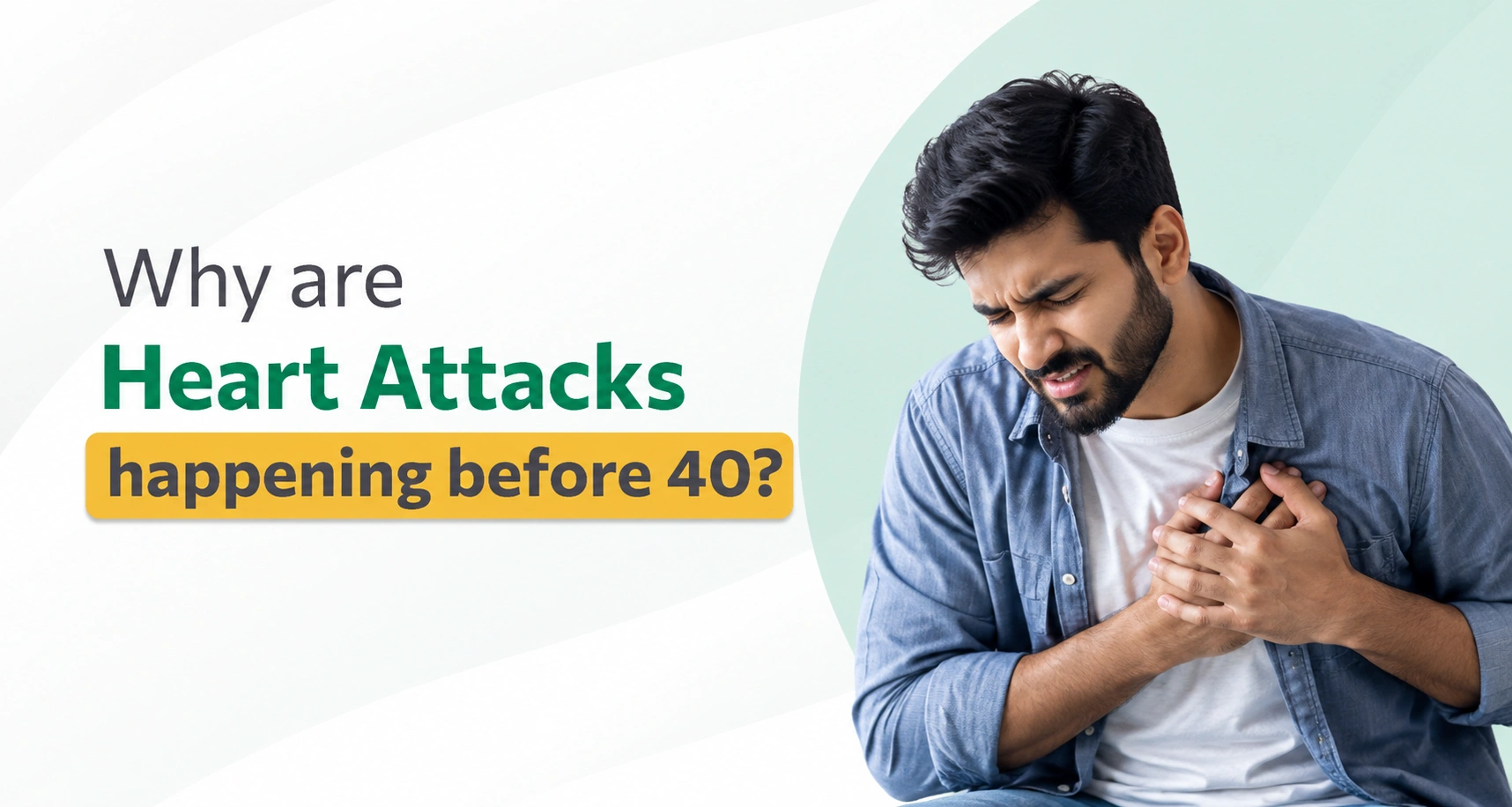
A generation ago, heart attacks were a worry for people in their 60s, or their 50s at the earliest. Today, doctors are seeing patients in their 30s and 40s walk into emergency rooms with signs of heart conditions once seen only at their parents’ current age.
An Indian Heart Association article reveals that 50% of heart attacks in Indian men occur under the age of 50, and 25% occur under 40.
Mortality data shows the scale of this shift: deaths from premature coronary artery disease in India rose from 191,053 in 2000 to 286,055 in 2019, a nearly 50% increase in two decades.
This pattern has become more prominent and cannot be dismissed as a coincidence; cardiologists see it as a notable shift in cardiac health patterns. So, what’s actually behind it – and what can you do about it?
Why It’s Happening More Often?
There is no single cause behind the rising instances of early heart attacks. Several risk factors accumulate at once, often quietly, without the usual warning signs, and tend to result in a cardiac episode.
Older patients typically develop heart disease slowly, over several years, due to prolonged, unmanaged conditions like diabetes or hypertension. In younger people, the damage builds through a mix of unhealthy daily habits, chronic stress, and genetic predisposition. The national CADY registry, which tracked young heart patients across 22 Indian centers, found that 49% already had hypertension, 44% had diabetes, and 39% used tobacco – meaning this “quiet build-up” is often well underway, yet invisible, until it becomes an emergency.
Lifestyle Factor:
Modern lifestyles place an immense burden on the heart. Desk jobs leave little room for movement, and busy schedules push people towards quick-fix meals loaded with processed food, trans fats, and refined carbs. All of this steadily pushes LDL (bad cholesterol) up and HDL (good cholesterol) down.
A study of young Indian adults with premature coronary artery disease (mean age just 30 years) found that 66% were overweight or obese, 79% had an unhealthy waist-to-hip ratio, 59% had high LDL, 54% had high triglycerides, and 59% had low HDL – nearly every marker of poor heart health, already present in people barely in their 30s.
Combine these with erratic sleep, smoking, and alcohol consumption, and the cardiovascular system is under heavy strain, well well before 50. The fact is that none of these habits seem like real danger in the present moment. The damage adds up quietly and remains hidden until a cardiac event exposes it.
Stress Factor:
Stress doesn’t merely affect your mood; chronic stress directly impacts the heart too. When your body is constantly under stress, cortisol and adrenaline stay elevated, blood pressure spikes, and inflammation increases. You’re also more likely to reach for coping habits that make things worse – binge eating, smoking, or skipping physical activity.
Hospital data shows just how common this is. A tertiary care study in India found that 52.9% of heart attack patients had severe stress and 38.4% had moderate stress at admission, while only 8.6% reported low stress. Those with severe stress also tended to be younger, male, and less physically active.
Younger working professionals face intense stress – demanding jobs, financial pressure, skewed work-life boundaries, and a phone that never lets the nervous system regulate.
Genetic Factor:
Lifestyle isn’t the complete story; genetics also play a crucial role in your chances of developing early heart disease. If a parent or sibling had heart disease before 55 (for men) or 65 (for women), your own risk goes up, irrespective of how well you eat or how often you work out.
This shows up in Indian data too: the CADY registry found that a staggering 50% of young Indian patients with heart disease had a family history of it.
Inherited conditions like diabetes, hypertension, and hypercholesterolemia may add to the risk further. If your family history looks like this, proactive cardiac screening should become the norm at this point.
Warning Signs to Watch Out For:
Heart attacks aren’t as dramatic as the movies make them out to be. In younger people, they are often subtler and mistaken for stress, fatigue, or indigestion from a bad meal. Watch out for these signs:
- Chest pains – sometimes experienced as tightness or discomfort.
- Shortness of breath, even with mild exertion.
- Unexplained fatigue that doesn’t go away even with rest.
- Radiating pain in the arm, back, or jaw.
- Abdominal discomfort that can be mistaken for acid reflux.
- Cold sweats, nausea, or dizziness.
Cardiac Screening Tests You Should Know About:
Understanding your risk factors is one thing – knowing your numbers is another. Most cardiac screening tests are simple, quick, and reveal key information about your heart health. Here’s a breakdown of common tests and what they evaluate:
- Lipid Profile: Measures total cholesterol, LDL, HDL, and triglyceride levels.
- Blood Pressure Check: A quick assessment that shows early signs when something is off.
- Electrocardiogram (ECG): Records your heart’s electrical activity to catch irregular rhythms or past damage.
- Echocardiogram: An ultrasound of the heart showing pumping efficiency and valve function.
- Treadmill Test (TMT): A stress test checks how your heart responds under physical exertion or simulated stress.
- HbA1c and Fasting Blood Sugar: Blood glucose plays a vital role in heart health, especially with undiagnosed or uncontrolled diabetes.
- CT Calcium Score: A specialized scan that detects calcium buildup in the coronary arteries, often recommended for those with a strong family history.
If you’re assessing your heart health for the first time and don’t fall under any risk category, you can begin with a lipid profile, BP check, and ECG. Further tests depend on your family history, risk evaluation, and medical assessment.
Preventive Steps You Can Take:
A few consistent changes go a long way in keeping your heart healthy – and the earlier you start, the more they count.
- Aim for daily movement: 30 minutes of brisk activity boosts circulation and does wonders for your heart.
- Ensure proper sleep: 7-9 hours of uninterrupted sleep gives your body real recovery time.
- Be mindful of your diet: Include more fresh fruits, vegetables, whole grains, fiber, and healthy fats. Keep highly processed, sugary, or deep-fried foods off the table.
- Manage your stress: Try meditation, journaling, gentle exercise, or a hobby to relax and keep the cortisol at bay.
- Screen Regularly: This is non-negotiable, especially with family history or other risk factors.
Don’t Wait for the Warning Signs:
Heart attacks before 40 are no longer a rare exception; they are the reality of a modern lifestyle shaped by genetics and stress. Your first line of defense is awareness: know your risk factors and listen to what your body is telling you. Early screening is always the best bet, especially for silent conditions like heart attacks.
Heart issues don’t just knock at midlife – they’ve already been at your doorstep much longer than you know. Book a cardiac screening at Aarthi Scans and Labs and give your heart the care and protection it deserves.