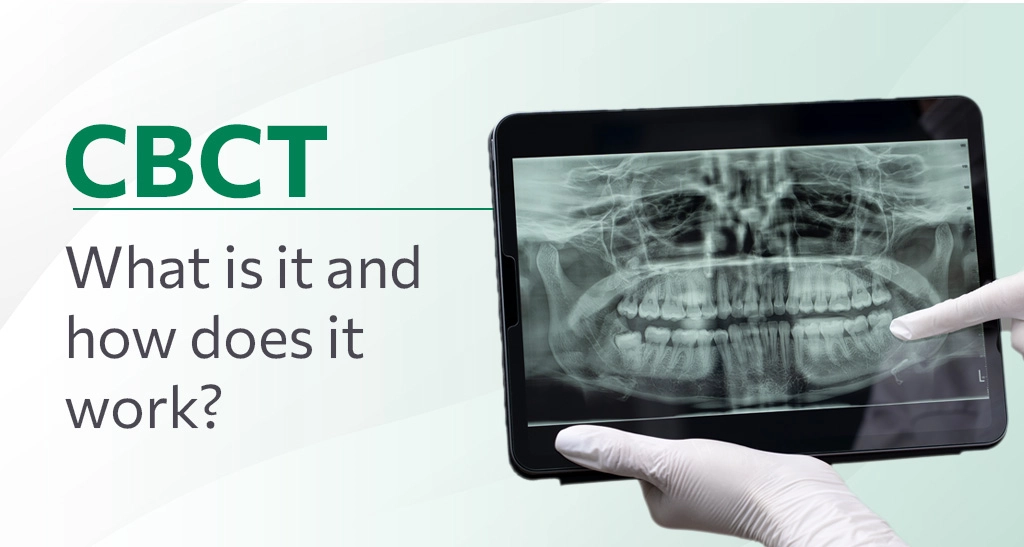
you must have heard about CT, but did you know there’s something called CBCT? Dentists use CBCT, or cone beam computed tomography, as a specialized type of CT scan for dental purposes Now I know there are many questions on your mind. What are its uses? How does it work? What is the procedure? Don’t worry! We’ve got answers to all your questions. Let’s take a deep dive into CBCT (Cone Beam Computed Tomography).
What is CBCT, and why is it used for?
CBCT, or cone-beam computed tomography, is a specialized type of CT scan designed for dental purposes. They choose this advanced imaging technique when conventional X-rays do not provide essential information. This offers a detailed look into dental structures, soft tissues, and bone in the facial region and evaluates concerns relating to the jaw, face, nasal cavity, teeth, etc.
CBCT has many major uses in dental procedures and concerns. It is invaluable in surgical planning for impacted teeth, precise dental implant placements, diagnosing Temporomandibular Joint Disorder (TMJ), and evaluating various concerns affecting the nerves, soft tissues, bone, nasal cavity, and sinuses. It also plays a vital role in diagnosing and treating jaw tumors and facilitating reconstructive surgery.
Procedure of CBCT
The procedure involves the patient sitting or lying down while the C-arm rotates 360 degrees around the head, capturing multiple images from different angles. The system digitally combines these images to create a 3D representation of the oral and craniofacial structures. The entire process requires minimal effort from the patient, takes only seconds to complete, which makes it more efficient than other imaging methods used.
Considerations
Though the amount of radiation is very low, a CBCT also contains ionizing radiation. Therefore, dentists use it only when necessary. It’s also crucial to optimize the CBCT to produce the lowest dose of radiation possible.
The dentist knows the patient’s health history and vulnerabilities, so they are in the best position to decide whether to use a CBCT.
While CBCT and conventional CT are distinct, they share the foundational technology for image production.
Patients are given a detailed explanation of why and how a CBCT is performed so they clearly understand the benefits and risks.
In conclusion, CBCT emerges as a revolutionary tool in dental imaging. They provide invaluable insights for complex cases and ensuring accurate diagnoses and treatment planning. Schedule your CBCT appointment at Aarthi Scans and Labs.