The World Health Organization has announced Mpox as a global emergency.
What is monkeypox?
Monkey pox, or Mpox, is an infectious viral disease caused by the monkey pox virus that is like smallpox. Monkey pox, as the name suggests, was originally transmitted through direct contact with the Mpox virus.
Earlier in 2022, most cases were reported in central and western Africa. However, this time the outbreak has been wide, affecting other parts of Africa and slowly other countries.
What causes Mpox?
Monkeypox or mpox is caused by the mpox virus. Person-to-person transmission can happen through direct contact with infectious skin, lesions, and rashes.
Spread
As we’ve already seen, mumps spread through direct contact with the mumps virus.
It spreads through touching or encountering infectious skin, rashes or other lesions, such as in the mouth or on genitals. This includes,
- blood
- bodily fluids
- skin or mucous lesions
- respiratory droplets
Mpox also spreads through contact with objects, fabrics, or surfaces that contain the mpox virus.
Pregnant women can also pass it down to the fetus through placenta. And breastfeeding mothers can infect the baby through breastfeeding and skin-to-skin contact.
This also means that mpox can spread through intimate contact.
- hugging, massaging or kissing
- oral, vaginal or anal intercourse
- face-to-face contact
- touching objects that contain Mpox virus.
Transmission can also occur through,
- Scratches and bites from infected animals
- Eating the meat of the animal infected by Mpox
Mpox symptoms
Mpox symptoms are typically milder than smallpox.
The symptoms usually take 1–21 days for exposure and normally last 2-4 weeks for someone with a weak immune system.
Common symptoms of Mpox are,
- rash
- fever
- sore throat
- headache
- muscle aches
- back pain
- low energy
- Swollen lymph nodes.
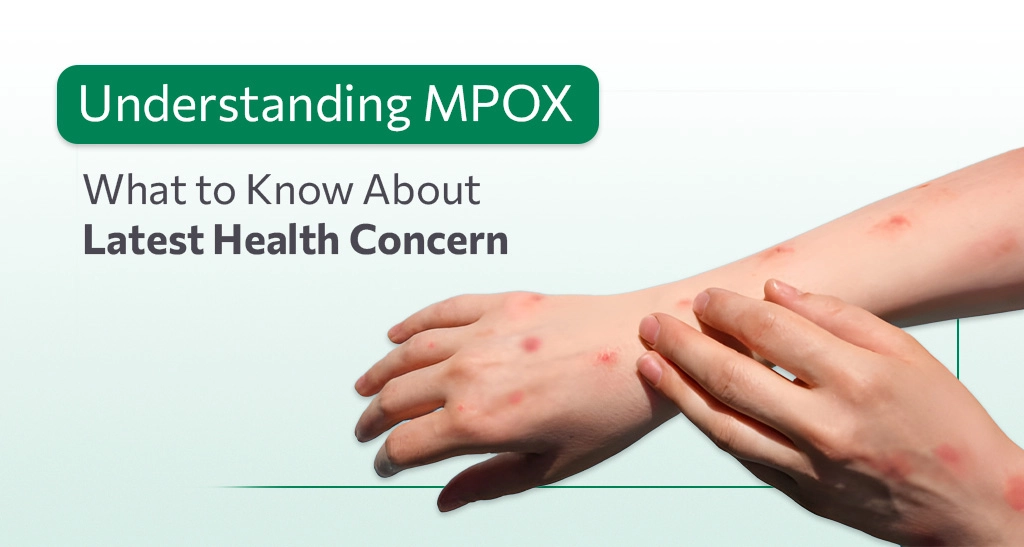
For some people, the first symptoms of Mpox can be a rash, The rash starts a flat sore, which develops into a blister filled with liquid or pus that may be itchy and painful. As the rash heals, the lesions crust over and heal.
Some people may have few lesions, and others might have hundreds of them. The lesions can appear in body parts such as,
- palms of hands and soles of feet
- face, mouth and throat
- groin and genital areas
- anus
Commonly fever, muscle aches and sore throats appear first. The rashes start first on the face and spread across the body from hands to feet and progress over 2-4 weeks.
Vaccination for Mpox?
According to the WHO, the smallpox vaccination is 85% effective in the development of Mpox. This means if you’ve received the smallpox vaccination as a child, if you contract Mpox, your symptoms will be mild.
Getting an Mpox vaccine can help with the infection. The vaccine should be given within 4 days of contact with someone who has Mpox (or within up to 14 days (about 2 weeks) if there are no symptoms).
Self-care and Prevention
Getting vaccinated to prevent and avoid mpox, washing your hands regularly, and, most importantly, avoiding contact with infected people, animals and surfaces can help prevent infection.