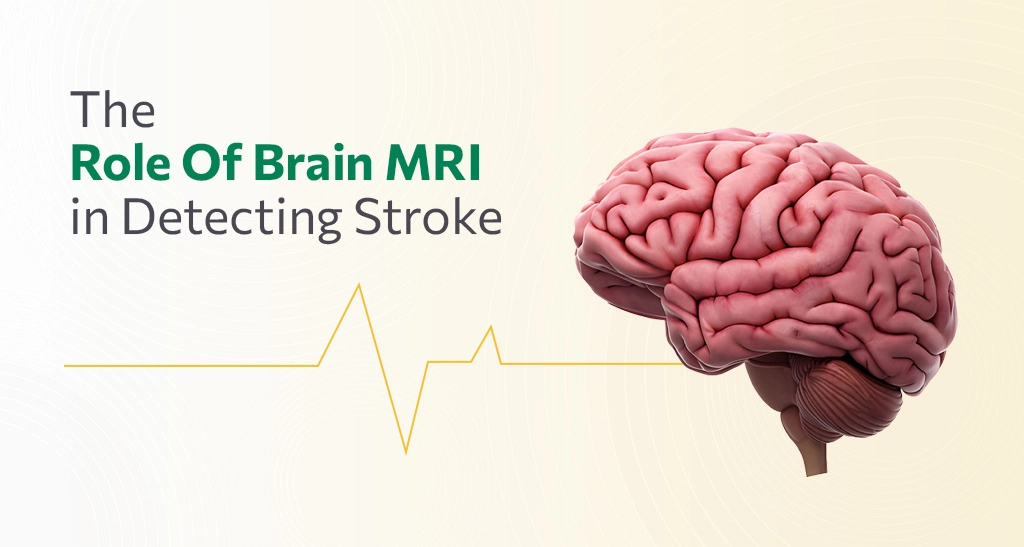
Unlike conventional imaging methods, a head MRI scan offers unparalleled insights into the brain, spotting abnormalities in the skull as well as spinal cord. Using magnetic fields, radio waves and cutting-edge computing technology, an MRI scan delves deep into the brain and reveals any subtle deviations and abnormalities. This blog explores the role of Brain MRI in detecting stroke!
MRI scan is useful in the detection of stroke, it helps in the distinction between ischemic and hemorrhagic strokes.
But what exactly is a stroke? A stroke is a condition that occurs when the blood supply to the brain is abruptly interrupted, either by a blocked or burst blood vessel. This disruption can manifest in two forms: hemorrhagic, characterized by a blood vessel rupture and subsequent bleeding into the brain, or ischemic, wherein restricted blood flow leads to oxygen deprivation in brain tissues, leading to tissue damage and potential disability.
How does MRI help in stroke detection?
Brain imaging plays a crucial role in the detection and management of strokes. Beyond the physical manifestations, diagnostic brain scans are indispensable for pinpointing crucial details:
The type of stroke – whether it stems from arterial blockage or vessel rupture.
The precise location of brain damage.
The severity and extent of the stroke’s impact.
MRI scan can take multiple images of the head at the same time. A CT scan can take several hours to reveal any blockages of blood flow, while an MRI detects any brain damage within an hour of the onset of stroke symptoms.
In this context, the superior resolution of MRI scans proves instrumental in dealing with the nuanced complexities of stroke. MRI maps out brain tissue to uncover even the minutest aberrations, offering vital insights into the stroke and possibilities for treatment.
Types of Strokes
Ischemic stroke, in particular, accounts for a significant share of mortality and disability cases. Timely intervention is crucial for ischemic stroke as the treatment window is very narrow with three to four hours. Thrombolytic therapy is the only treatment for ischemic stroke. Yet, the efficacy of the therapy hinges on accurate diagnosis. MRI’s heightened sensitivity and specificity is better and makes it more preferred at treating ischemic stroke than CT.
In hemorrhagic stroke, MRI detects the causes of secondary hemorrhages, including vascular malformations such as cavernomas, tumors and cerebral vein thrombosis. It also helps distinguish between the hemorrhagic transformation and primary hemorrhage.
MRI scan detects acute hemorrhage when acute focal stroke symptoms are present. It is more accurate than CT for the detection of chronic intracerebral hemorrhage.
In essence, a stroke MRI transcends mere diagnosis, it helps for treatment planning and prognostic assessment. MRI scans pave the way for tailored therapeutic strategies, informed by a comprehensive understanding of the stroke’s underlying causes and implications.
At Aarthi Scans and Labs, we offer state-of-the-art MRI scan machines that ensure precision and accuracy in brain imaging. Schedule your MRI scan appointment with us today for enhanced stroke detection and treatment planning.